My practice is driven by an ongoing inquiry into why narratives of progress so often mutate into new forms of oppression. Rather than treating progress as a neutral or inevitable force, I approach it as a disciplinary mechanism—one that reorganises space, labour, memory, and everyday life while obscuring its own violence. Working across installation, sound, text, and archival intervention, I seek to expose the operational structures behind political, ecological, and historical narratives.
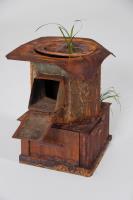
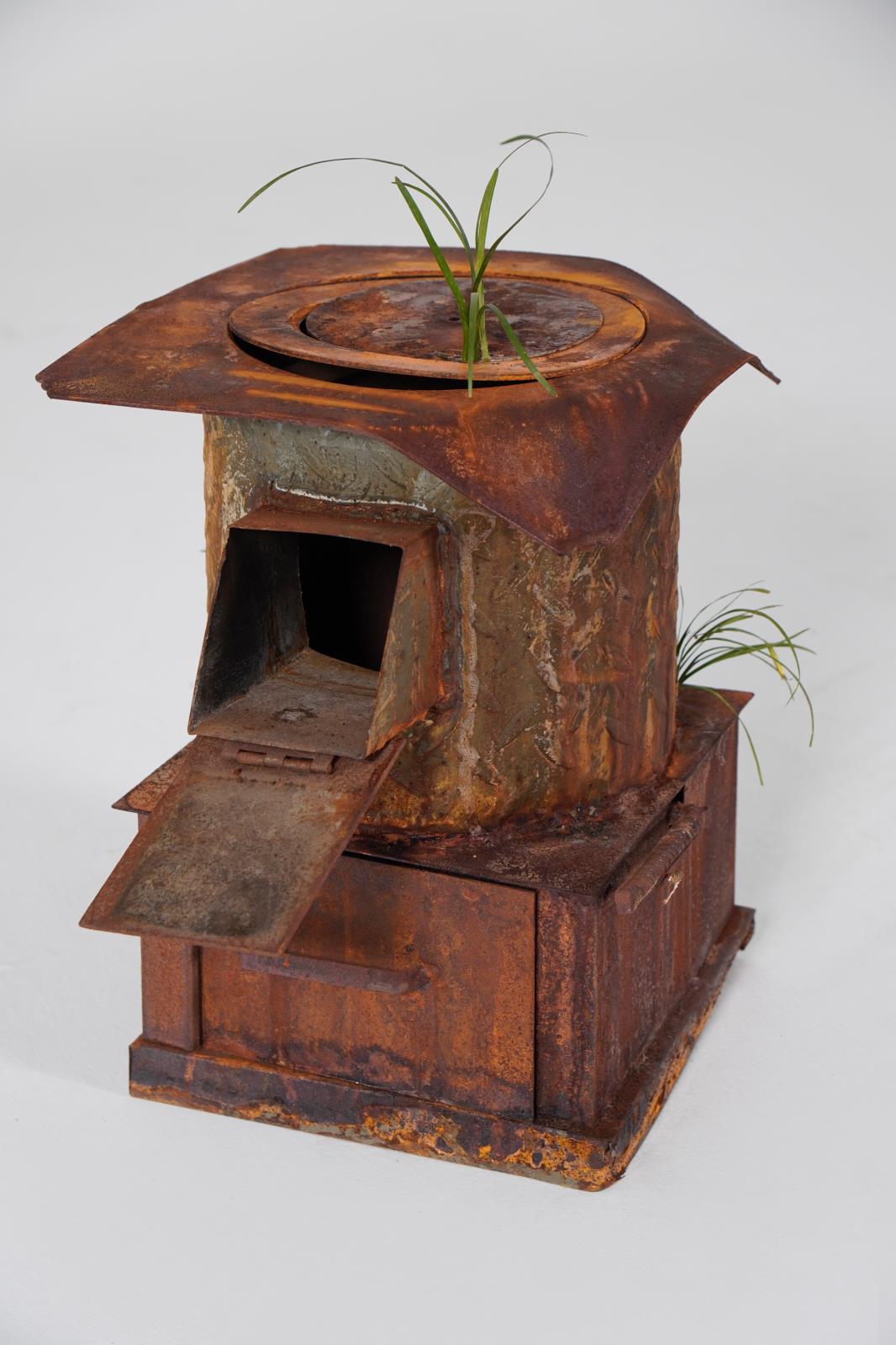
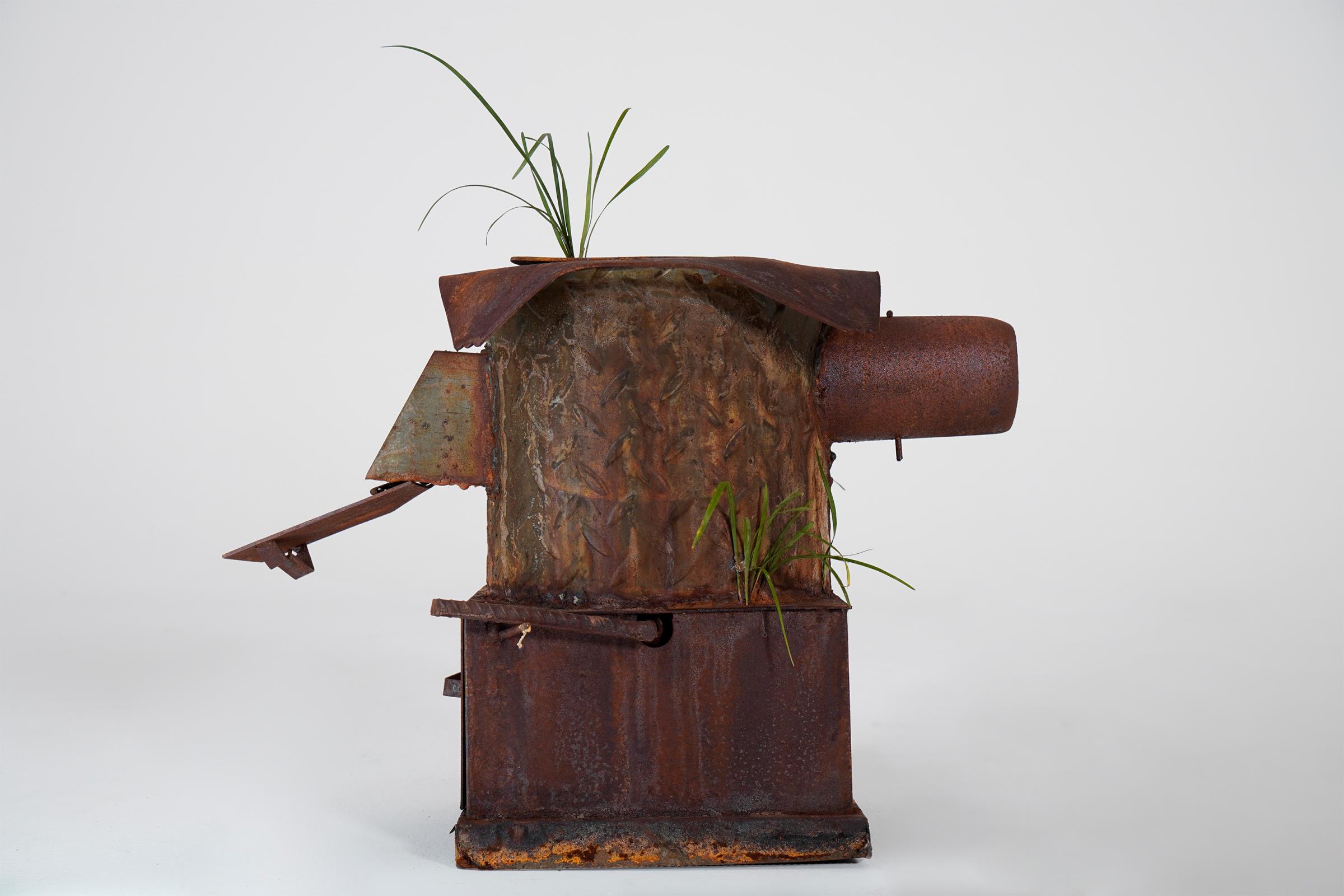
Much of my work is grounded in the ecological and political landscape of contemporary China. In Rust, I focus on the “Coal-to-Gas Poverty Alleviation Project” forcibly implemented in rural Hebei under China’s energy transition policies. While framed as an environmental and progressive reform, the project disproportionately targeted economically and socially vulnerable rural communities, resulting in widespread energy poverty. I treat the forcibly demolished coal stoves as material relics of this policy—silent witnesses that register the lives disrupted and sacrificed by systemic decision-making. Through sound installation and oral history, I attempt to record voices that have been neglected, forgotten, or erased within dominant energy and development discourses, foregrounding the structural injustice embedded in this transformation.
In a parallel investigation of history and nationalism, my project based on the archives of Tsingtao Beer examines the localisation of a foreign commodity as a lens through which to understand the construction of modern Chinese national identity. Tracing Tsingtao Beer’s transformation across periods of colonisation, state-building, and marketisation, I reconfigure archival materials alongside oral histories from Qingdao’s older generation. These personal recollections reveal how large historical processes are internalised emotionally, producing nostalgia, loss, and melancholy that persist beneath official historical narratives.
Across my practice, I am less interested in representation than in revealing how power operates through systems of instrumental rationality—how policies, archives, and objects discipline perception and memory. My projects are not conceived as closed works, but as ongoing methods of inquiry. By remaining with complexity, contradiction, and uncertainty, I aim to resist the simplifications imposed by dominant narratives and to reopen questions that have been prematurely settled by structures of power.
Shu Lin (b. 2002) is a multidisciplinary artist from China, currently based in London. Working across installation, sound, image, video, and text, their practice investigates the entangled relationships between power, discipline, history, and memory, with particular attention to how political and ecological narratives shape everyday life and subjectivity.
Drawing on archival research, oral history, and material remnants, Shu Lin often examines moments where narratives of progress—such as modernisation, industrialisation, and energy transition—produce new forms of structural violence and erasure. Their work foregrounds marginalised voices and overlooked experiences, revealing the contradictions between official discourse and lived reality.
Shu Lin holds a BFA in Digital Media Arts from the Beijing Institute of Graphic Communication and is currently pursuing an MFA in Fine Art at Goldsmiths, University of London. Their recent exhibition Fables was held at Mall Galleries, London (2025). Their work has been exhibited in London, Beijing, and Qingdao.